There’s no nice way to say you’re eliminating positions that shouldn’t have existed in the first place. But the fact is that growth across many industries was a response to social trends rather than actual consumer or client demand. The antidote is to not conflate whatever society is angry about that day with why you’re being paid. And if you’re being paid because society is angry that day, start developing demonstrable skills with proven demand.
Being laid off in 2009 taught me this the hard way. I graduated in 2007 double majoring in Philosophy and English following parental advice to “just get your degree”. Fortunately they also said “you’re a grown man” once I left for college. So I had to figure it out on my own. Studying philosophy taught me how to think, how to navigate ambiguity, and how to not give up in pursuit of large questions. English taught me to write effectively, communicate ideas persuasively, and tell stories with an end goal in mind. But neither insulated me from layoffs.
It was late nights teaching myself not just how to write on wordpress, but the HTML, CSS, website hosting, and domain configuration to build my own websites. Not just assembling PowerPoints with templates, but teaching myself the Adobe products to create my own graphics.
Photo of my home library shelf for skill-building books.
I viewed these skills as just a hobby, not knowing how to add them to my resume without them being used in any job I had. One day however, they came in handy when my employer was struggling to communicate their value proposition while competing for a $7M RFP. It was all everyone was talking about around the office for weeks, and impossible not to feel the energy of how historic the opportunity was. While it was outside of the scope of my job, and without considering additional pay, I took it upon myself to put these skills to use.
I developed a series of microsites on a custom domain, configured it to be indexed by Google, and began to embed all of the videos and PDFs the marketing department produced but hid behind a login — all before our company had a Product Marketing role or department.
Screenshots from microsite developed in HTML and CSS.
I’m sure there were things in the news that would’ve angered me, especially as a Black man. But I’ve never been an advocate of “bringing my whole self to work”, especially when I wasn’t being paid to be. For many including me, work, specifically the office, served as a respite from that. Understanding my company’s goals, and asking myself how could I better help them achieve them, gave me the ideas to play my role in helping us make history for our company, our customers, and our shareholders. That single decision changed my professional and financial trajectory.
This is also why I’m an opponent of remote work. So many impromptu opportunities for personal growth, development that directly leads to income mobility take place at the office. Slack will never replace this. It’s hard to ask for a “seat at the table” from your living room. It’s also why I believe strongly in democratizing skill development. While we can’t manufacture ambition, we can ensure those who possess it aren’t stifled by antiquated products or policies.
Skills inoculate us from imposter syndrome. Consider basketball. Guards aren’t intimidated by forwards because we understand how our role complements theirs and why our unique skills are needed. It’s only when you’re the towel guy or some made up role where you’re intimidated.
Librarians are only intimidated by researchers if they lack real skills and have to pretend being something they aren’t. Those who have tangible skills such as vendor relations, data analysis, copyright, digitization (eg services researchers need) are not intimidated.
The solution isn’t to invent roles not core to running a library to accommodate people without skills. That may work in peace time, but frivolous expenses get cut during war. If we care about people long-term, the solution is to create budget and policy for skill development.
This decade, for the first time in history, talent management will replace resource management as the primary strategic focus for libraries.
Libraries no longer have the luxury of outsourcing talent management to HR departments.
Strategic initiatives in collections, space, services, etc are susceptible to failure and funding insecurity without having the right talent to manage it.
Patrons and researchers will resort to third-party tools and services in search of content and resources unless the library has the talent to engage with them on their terms.
Vendors, publishers, and service providers will win negotiations in the short and long-term against libraries without the talent to navigate an increasingly complex commercial landscape on behalf of the parent institution.
Staff retention and organizational culture will erode without the talent to navigate the imminent, multi-faceted demographic shifts facing libraries.
Funding and advancement dollars will go to research, facilities, athletics, and other areas without the talent to communicate the library’s impact on modern culture and society.
Each library needs a sustainable talent development strategy that is tailored to their local context, aligning training and recruitment dollars to strategic directions with measurable outcomes.
As collections continue inching towards ubiquity, there are only a few areas where a library can differentiate itself as unique. Of these, talent management is the one most in the library’s control.
Recently I had a conversation with an incumbent in our industry. Not a rare occurrence nowadays but this one stuck with me more than the others for some reason. As usual, they were curious about Skilltype and its technology, along with how we define success as a company. The conversation didn’t go as I anticipated, leaving me to reflect on a number of questions.
Outside of this conversation, I began to reflect on the state of the library industry and its many challenges. There are a number of well-documented problems that had to occur on someone’s watch, either individually or collectively. A core competency of leadership is ensuring history doesn’t repeat itself on your watch. So many lessons can be gleaned from examining the fate of incumbents who’s agendas were thwarted by an unsuspecting approach or event. While I’ve seen a handful of post-mortems from directors upon retirement from their library, it would be great for this to become the norm. I haven’t seen any at the profession-level.
In libraries, we can understand this in the micro and the macro. In the micro, a library director should spend as much time as necessary to glean a working history of their predecessors’ tactics and strategies to ascertain what worked and what didn’t. In the macro, associations, consortia, and other communities responsible for shepherding the profession should prioritize study not only their predecessors, but adjacent industries that are subject to the same dynamics.
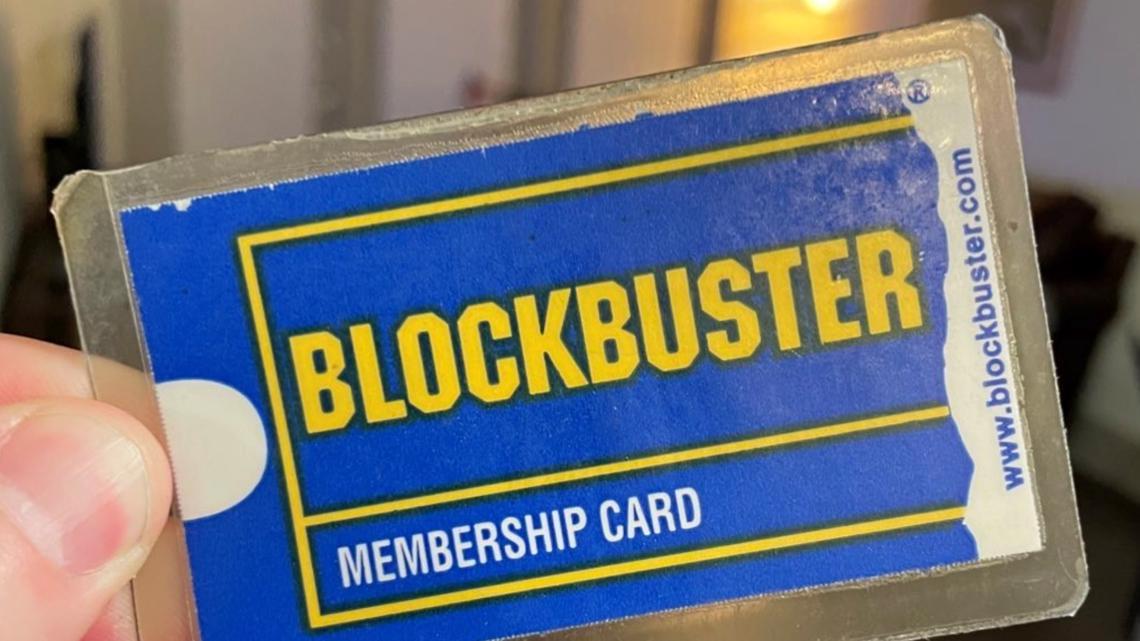
Blockbuster cards. Remember those?
There are some legendary examples of not heeding history that have been discussed in entrepreneurship and innovation circles, but have a much broader application. Consider two brief case studies.
In 1996, Barnes & Noble had $2B in sales through their brick and mortar imprint, while new kid on the block Amazon.com posted a meager $16M in sales. Three years later, Steve Riggio, creator of barnesandnoble.com, infamously states “No one is going to beat us at selling books – it just ain’t gonna happen.” While the rest is history, it’s worth studying the hubris on display here and the humility of defeat 20 years later here.
In 2000, Netflix was hemorrhaging cash. They concluded the only way out was to sell to their cash-rich rival Blockbuster, arguing that their online business would be a great complement to their brick and mortar operation. When CEO Reed Hastings flew to Dallas to propose an acquisition offer with Blockbuster CEO John Antioco, the California entrepreneur was dismissed and almost laughed out of the room. What took place between Blockbuster’s smug dismissal and their bankruptcy declaration 10 years later?
Today, being a student of history is an unspoken rule of the office. Position descriptions don’t make studying history to avoid past mistakes an explicit duty with measurable outcomes (eg write quarterly case studies to be presented to staff and colleagues in leadership on lessons learned). But it is in the individual’s best interest to take this on, as the blame for history repeating falls squarely on them and their performance. It is also in the best interest of institutions and stakeholders to support their leaders to keep a pulse on how history can be heeded.
This week, I learned a lot about the library profession. I traveled to Columbus, Ohio as a first-time attendee of the IDEAL ’19 conference on Inclusion, Diversity and Equity in Academic Libraries. I joined five of my colleagues from Boston University Libraries for the 2-day event hosted by The Ohio State University Libraries.
I managed to be active on Twitter for the better part of the conference. (See my IDEAL ’19 hot takes here.) But one thread that followed me throughout the sessions I attended, the meetings I scheduled, and the impromptu networking chats I had was the the potential of the diversity resident librarian.
I first heard about diversity resident librarians a couple years ago over dinner with Jon Cawthorne. He told me about a program he was developing called the ACRL Diversity Alliance where academic libraries commit to hiring underrepresented candidates for a two-year residency.
I began to think about this after a couple of chats I had during the breaks. During one, a baby boomer colleague asked me what I did at BU. When I said I was an entrepreneur in residence, he assumed I meant I was a diversity resident focusing on entrepreneurship or the business library. Maybe it was the age difference. Maybe it was the common understanding of residencies in libraries today. We had an interesting conversation trying to untangle these semantics.
A second conversation was with two actual diversity residents. When I asked what they did, they struggled to explain their jobs. Maybe it was because they were still new. Maybe it was because the role changes overtime. Or maybe it was because it’s not a role that has a natural path forward. Either way, I did get a better sense that the work they were doing was not focused on diversity, equity and inclusion at their organizations.
After all, the expertise required for this work isn’t taught in library school. Further, people don’t enroll in library school to become diversity coordinators – they go for an MLIS degree to manage information.
Semantics actually matter when it comes to Diversity Residents
The goal of diversity residents is both morally strong and strategically sound. It’s smart for organizations to have diverse perspectives and experiences when serving increasingly diverse populations. This is the same as affirmative action-driven admissions policies on college campuses. But colleges don’t label students “affirmative action admits” or “diversity students”. Once admitted, the student is able to blend into the community and focus on their area of study.
Diversity residents in libraries don’t have this ability. The organization and the public knows that the primary reason they are employed at the organization is due to their race or ethnicity as opposed to their merit. This creates a few problems:
It sends the wrong message to the resident. It suggests that the main reason you’re here is because of your background – not because of your potential, or the actual contributions you will make to our organization. “Your profile/persona – not your intellect, voice or passion – is what we need.” Not cool.
It fuels tokenism. A paradox of diversity initiatives is that organizations are not diverse, therefore hiring diverse candidates is the solution. But most diverse candidates are not organizational development experts (as these issues aren’t even taught in MLIS curricula), while they are viewed as the expert in non-diverse environments, asked to serve on committees, speak at events, be present for photo opportunities, etc. This phenomenon is institutionalized through adding “Diversity” to the title.
It puts the employee in a foyer, not on a ladder. Unlike 50 years ago, dismantling white supremacy through hiring non-whites is now socially acceptable. But “Diversity Resident” roles have no place to go as the individual gains more experience. Inside of the organization, there’s no natural place to advance to on the org chart – they essentially start from scratch after the 18-24 months expires in a new role, making the diversity role more like a foyer to enter a building, as opposed to a ladder to climb up it’s floors. By removing Diversity from the title, the organization is forced to fit the diverse hire in an actual formal position that their colleagues understand where it fits within the operations, along with other organizations in the community who would potentially consider this individual for opportunities.
The irony of me making this recommendation is that I’m a resident myself. A diverse one at that. So am I being hypocritical when I say that we should get rid of the residency model? Not exactly. While I’m not a Diversity Resident in the traditional sense, the difference is that I have 12 years of experience with a very clear direction of what’s next for my career, and my organization has a very unusual circumstance that takes place once every couple of decades. Below are a few reasons why the traditional diversity resident model for entry-level diverse candidates is not ideal.
More difficult for the resident: To have a potential end-date to your role when your desire is to work long-term hampers you from doing your best work. The mental burden of worrying whether you will be rewarded with long-term employment, not contingent on your actual performance but rather the structure of the agreement, is a very precarious position to be in. This is coupled with reserved interactions with co-workers, the next point.
More difficult for co-workers: Diversity Residencies create an environment where other members of the organization are not incentivized to invest in meaningful work relationships with the resident, given that they probably won’t be there after 18 months. People sense their “other” status due to their employment agreement, which only compounds the “other” status held by being non-white.
Not economic for the organization: Ultimately, the residency model does a disservice to the organization, as meaningful long-term responsibility cannot be assigned to a temporary employee. The organization also loses out on the institutional knowledge and leadership investment it poured into the employee.
Let’s continue iterating on our good intentions
Now, my opinions should not be taken as opposition to diversity residencies – I think that they are better than no effort at all. After all, reversing 400 years of oppression against Black people and another several decades of discrimination against other non-whites is the most difficult work of our time. All initiatives led by people who commit their lives and careers to right these wrongs should be applauded.
But if the intention is truly to diversify the organization in the short-term and the profession in the long-term, the mechanics of the employment agreement should be reconsidered.
We have to consider the structure of these programs not only from the organization’s perspective, which bears in mind a larger economic and operational context, but also from the perspective of the resident and the community they come from.
Precarious employment agreements and lack of direction, coupled with non-transferable experiences and the collective emotional burden of tokenization are a recipe for burnout. The retention rates of these programs are less correlated to the recruitment efforts, but more to the program’s structure.
Have you hosted or are considering hosting a diversity resident? Were you a diversity resident yourself? Let me know your thoughts on the future of diversity hiring on Twitter @zanders.